SDM: Unstable Protostellar Discs & Planet Formation | Non-Fellow Ticket
Date & Time
📅 Fri, Feb 13, 2026
🕐 10:00 AM
Ends: Fri, Feb 13, 2026 at 3:35 PM
Location
📍 The Geological Society
Piccadilly, London, W1J 0BD, United Kingdom, London, England, W1J 0BD
🏙️ London
About This Event
This is part of our Specialist Discussion Meeting Programme. Hybrid Event. This ticket is for Non-Fellows only.
Specialist Discussion Meeting:
Gravitationally Unstable Protostellar Discs and Their Role in Planet Formation
Many exoplanets have been discovered indirectly over the last 3 decades but now we are in an exciting era where telescopes, like SPHERE on the VLT, have enabled even direct observations. In parallel, facilities such as ALMA are routinely observing planet-forming discs in high spatial and spectral resolution, allowing us to witness planet formation in action. Recently, observations have shown that a subset of protostellar discs may be massive enough to be gravitationally unstable, such as Elias 2-24, AB Aur, L1448 IRS3B. Observations are also starting to probe Class 0 discs such as Oph A SM1, which are the very youngest discs and are also likely to be gravitationally unstable. Such discs are important to understand because they set the initial conditions for planet formation. Recent studies have started to investigate the importance of dust growth in gravitationally unstable discs, providing a potential planet formation pathway via the core accretion mechanism. The early phase of disc evolution may therefore play a key role in planet formation.
The aim of this meeting is to bring together theorists and observers to address key questions about the role of gravitationally unstable discs in planet formation:
- What factors affect the formation and evolution of gravitationally unstable discs?
- What are the observational signatures of gravitational instability, and do we observe these in Class 0 discs?
- What fraction of protostellar discs are gravitationally unstable? How does the occurrence and outcome of gravitational instability vary with stellar mass, metallicity, or environment (e.g. clustered vs isolated stars)?
- How do magnetic fields and non-ideal MHD effects influence the onset and evolution of gravitational instability in discs?
- What are the implications for dust transport, early grain growth, and the temperature structure of these discs, and how might these factors affect the core accretion model?
- Is planet formation of wide-orbit planets possible by gravitational instability and how can this be tested through current and upcoming observations (e.g. from ALMA, JWST, ngVLA)?
- How well do current numerical simulations reproduce observed disc structures, and what are the key challenges in bridging theory and observations?
Invited Speakers
TBD
Programme
10:00 - 10:30 Coffee
10:30 - 13:00 Morning Session
13:00 - 14:00 Lunch
14:00 - 15:30 Afternoon Session
15:30 - 16:00 Tea
Abstract submission (deadline: 17th November, 2025)
https://forms.gle/b1VtSCwJ8dna9iH3A
Organisers
Dimitris Stamatellos (University of Lancashire, dstamatellos@lancashire.ac.uk)
Farzana Meru (University of Warwick, F.Meru@warwick.ac.uk)
Alison Young (University of Leeds, a.k.young@leeds.ac.uk)
Photo Credit: A.Mercer & D. Stamatellos
How do you want to get there?
The Geological Society
Piccadilly, London, W1J 0BD, United Kingdom, London, England, W1J 0BD
Open in Google MapsTickets
GBP 6.13 - 16.96
Good to Know
Duration
5 hours 35 min
Refund Policy
Refunds up to 7 days before event
Organized by
More from Royal Astronomical Society

More Events in London
View All Events
Gong Bath Meditation with Cathy Eastburn
Sun, Mar 15, 2026
London
GBP 6.13 - 16.96
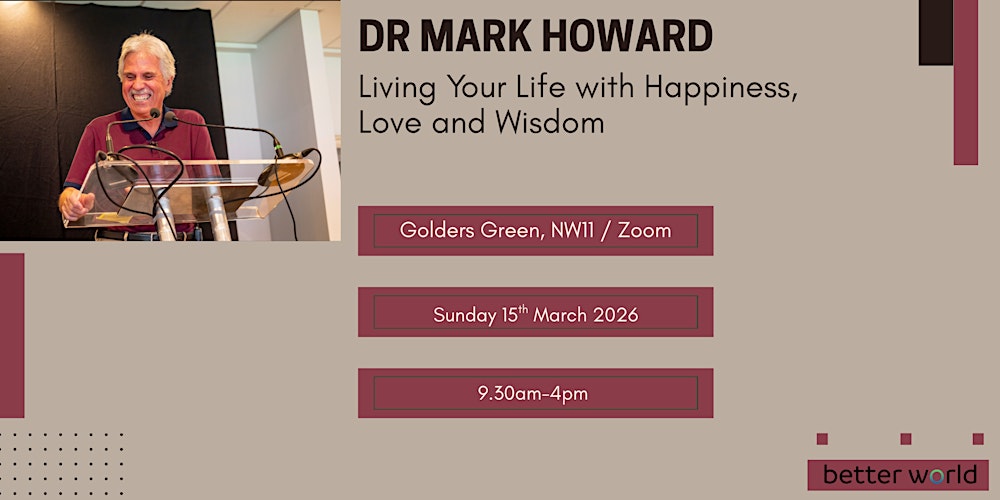
Living Your Life with Happiness, Love and Wisdom
Sun, Mar 15, 2026
London
GBP 107.96 - 130.72
Franco126 London - Futuri Possibili European Tour
Sun, Mar 15, 2026
London
GBP 33.17

Celebrate 15 Years With Open Out: 'Zine Launch & Workshop with Greygory
Sun, Mar 15, 2026
London
GBP 0.00 - 5.00

GHANA INDEPENDENCE GALA 2026 (Exclusive Black Tie Event)
Sun, Mar 15, 2026
London
GBP 44.04 - 921.60

PECKHAM Mother's Day 'Flower Power' Family Rave 15 Mar 2-4pm DJ Prime Cuts
Sun, Mar 15, 2026
London
GBP 0.00 - 12.91